
A ring worn every day meets door frames, countertops and dust. Some gems shrug that off for decades; others need a protective setting and a little caution.
Choosing a colored stone for an engagement ring is mostly about color and personal meaning. But the ring will be worn through years of daily life, so durability deserves a place in the decision. The good news is that several beautiful gems hold up very well, and the more delicate ones can still be worn with the right setting and habits.
Three kinds of durability
- Hardness is resistance to scratching, measured on the Mohs scale from 1 (talc) to 10 (diamond).
- Toughness is resistance to chipping, cracking and breaking from knocks. A hard stone is not always a tough one.
- Stability is resistance to heat, chemicals and light. Some gems fade, crack or lose treatments when exposed to them.
Hardness has a practical threshold. Ordinary dust contains quartz, which rates 7. Stones softer than 7 get tiny scratches from dust and contact over time and gradually lose their sharp polish.
Popular ring stones compared
| Gem | Mohs hardness | Toughness | Everyday ring? |
|---|---|---|---|
| Diamond | 10 | Good, can chip along cleavage | Excellent |
| Moissanite | about 9.25 | Good | Excellent |
| Ruby and sapphire | 9 | Excellent | Excellent |
| Alexandrite | 8.5 | Good | Very good |
| Spinel | 8 | Good | Very good |
| Topaz | 8 | Poor, splits on a knock | With a protective setting |
| Aquamarine and morganite | 7.5 to 8 | Fair to good | Good, with some care |
| Emerald | 7.5 to 8 | Often fragile due to fractures | With care and a protective setting |
| Tourmaline | 7 to 7.5 | Fair | With care |
| Garnet | 6.5 to 7.5 | Fair to good | With care |
| Tanzanite | 6 to 7 | Fair, has cleavage | Occasional wear or protective setting |
| Opal | 5.5 to 6.5 | Poor to fair | Occasional wear |
| Pearl | 2.5 to 4.5 | Fair | Occasional wear |
The strong choices
Diamonds combine top hardness with good toughness, though a hard knock at the wrong angle can still chip one. Rubies and sapphires are corundum, at 9 on the Mohs scale with excellent toughness; they are the classic colored choice for everyday rings. Our sapphire guide covers colors and treatments. Spinel and alexandrite are also hard and tough, and they come in colors that fit people who want something less common.
Stones that need a little care
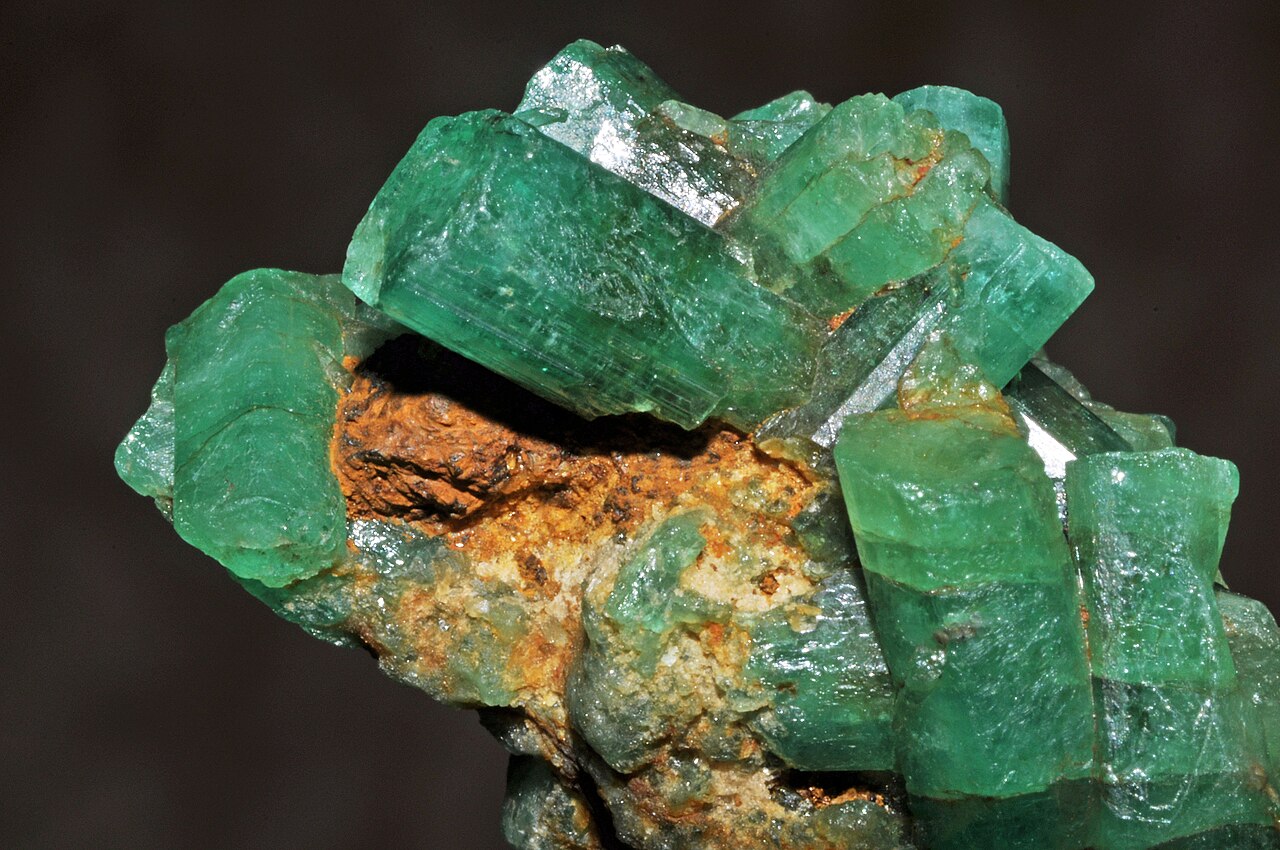
Emerald is hard but almost always contains small fractures, which are often filled with oil or resin to improve appearance. Those fractures make it vulnerable to knocks, and the fillers can be affected by heat, solvents and ultrasonic cleaning. See gemstone treatments for what fillers mean.
Aquamarine and morganite are reasonably durable for occasional knocks but softer than sapphire, so their facet edges wear over years of daily wear. Tanzanite and topaz have cleavage, a direction along which they can split cleanly from a sharp blow.
Opal and pearl are the most delicate. They scratch easily and dislike heat, chemicals and, for some opals, water. Many people choose them for right-hand rings or special-occasion pieces instead.
Settings that protect softer stones
The setting can make a large difference:
- Bezels wrap the stone’s edge in metal, protecting it from knocks. See low-profile engagement rings.
- Halos put a ring of harder stones and metal around the center, which takes the first hit. See the halo guide.
- Lower heads keep the stone closer to the finger and out of the way.
High, open prong settings expose the most of the stone, which shows it off and also leaves it most vulnerable. The settings comparison covers each style.
Careful: Whatever the stone, take rings off for gym work, gardening, moving furniture and cleaning with chemicals. Most chips and lost stones happen during exactly these tasks.
Heirloom and vintage stones
Older stones may already carry chips or worn edges. If an inherited emerald, opal or topaz is going into an everyday ring, have it inspected and choose a protective design; the guide to resetting an heirloom stone explains what to check.
Quick notes
- Durability has three parts: hardness (resisting scratches), toughness (resisting chips and breaks) and stability (resisting heat, chemicals and light).
- Household dust contains quartz, which rates 7 on the Mohs scale, so stones softer than 7 gradually lose their polish with daily wear.
- Diamond, sapphire and ruby are the safest choices for everyday rings; spinel and alexandrite are also strong options.
- Emerald, opal, tanzanite and pearl can be worn in rings, but they benefit from protective settings and being taken off for rough tasks.
Common questions
Q: Is a high Mohs number enough to make a stone durable?
A: No. Mohs hardness only measures scratch resistance. Topaz is hard but can split along a cleavage plane with a sharp knock, and emerald is hard but usually contains fractures that make it fragile.
Q: Can I wear an emerald engagement ring every day?
A: Many people do, with care. A bezel or halo helps protect it, and it should come off for heavy work, cleaning with chemicals and anything involving heat. Ultrasonic cleaners are not recommended for most emeralds.
Q: Why do opals need special care?
A: Opal is relatively soft and can crack from knocks or sudden temperature changes. Some opals are thin slices backed with another material, known as doublets or triplets, which should not be soaked in water.
Q: Is moissanite durable?
A: Moissanite rates about 9.25 on the Mohs scale, so it is very scratch resistant. It is a laboratory-made silicon carbide gem, and it should be described as moissanite rather than as a diamond.