
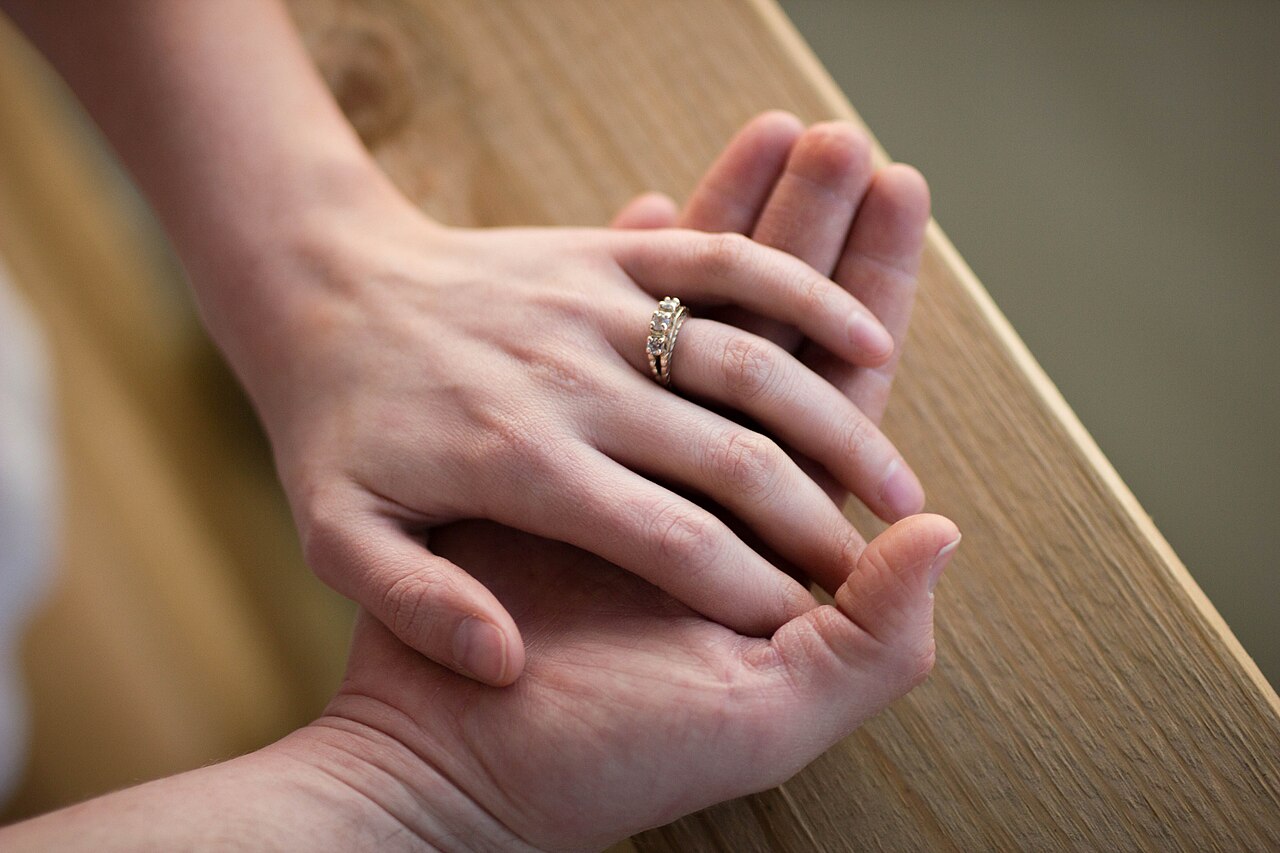
If the wearer works with gloves, lifts weights or spends the day with small children, setting height matters as much as style.
The first time many people notice setting height is when a ring catches on a glove, a sweater or a child’s hair. A high head shows a stone off from every angle, but it also takes the knocks. For people who use their hands all day, a lower profile can make the ring far easier to live with. For a broader look at styles, see engagement ring settings compared.
What “low profile” means
Setting height is the distance from the finger to the top of the stone. It depends on the stone’s depth and on how the head is built. Two rings with the same diamond can differ by several millimeters, which is very noticeable on the hand. Jewelers can usually give this measurement, and it is worth asking for.
Low-profile setting options
| Setting | How it sits | Protection | Look |
|---|---|---|---|
| Full bezel | Metal rim all around the stone | Highest; edge fully covered | Smooth, modern or vintage |
| Half-bezel | Metal on two sides, open on the others | High on the covered sides | Lets more light in than a full bezel |
| Low prong head | Prongs set close to the band | Good if tips are rounded | Classic solitaire look |
| Flush setting | Stone sunk into the band, top level with the metal | Very high | Minimal; suits smaller stones |
| Channel set band | Small stones between two metal walls | High | Clean, no prongs to catch |
Bezels and half-bezels
A bezel wraps the stone’s girdle, its thin outer edge, in a rim of metal. That edge is the part most likely to chip from a knock, so a bezel offers the most protection of any setting. It also has nothing to snag. The trade-off is a slightly smaller-looking stone and less light entering from the sides. A half-bezel keeps two sides open for more light while still protecting the most exposed edges.
Low prong heads
A prong setting can be built low, with the stone’s bottom point sitting just above the band. Rounded prong tips catch less than claws, and a smooth gallery under the stone avoids gaps that grab fibers. Our guide to prong settings covers tip shapes, and the guide to ring anatomy explains galleries.
Flush settings
In a flush setting, sometimes called a gypsy setting, the stone sits in a hole drilled into the band, with its top level with the metal. Nothing protrudes at all. Flush settings suit smaller stones and are common in men’s rings; the men’s wedding band guide has examples.
The band matters too
- Thicker bands resist bending, which protects the setting when a ring is knocked or squeezed.
- Comfort-fit interiors, rounded on the inside, are easier to wear all day.
- Smooth shoulders without raised details snag less.
Choosing the stone
A low setting protects a stone, but the stone’s own durability still matters. Diamonds, sapphires and rubies are the most forgiving; see which gemstones hold up in an everyday ring. Shapes with points, such as pears and marquise cuts, benefit from bezel tips or V-prongs.
Careful: A low ring is safer, not invincible. Take it off for weight training, gardening, moving furniture and cleaning with bleach or other harsh products. Some people keep a plain silicone band for those times.
Pairing with a wedding band
Low settings sometimes leave no space under the stone for a straight band to slide beneath. Ask how the ring pairs before committing; the guide to pairing a wedding band shows the fit options, including curved and notched bands.
Quick notes
- Setting height is the distance from the finger to the top of the stone; lower settings catch less and expose the stone to fewer knocks.
- Bezels, half-bezels, flush settings and low prong heads are the main low-profile options.
- Rounded prong tips, a smooth gallery and a sturdy band all reduce snagging and wear.
- Even a low ring should come off for heavy lifting, gardening and harsh cleaning products.
Common questions
Q: Does a low setting make the diamond look smaller?
A: Not from above. The face-up size depends on the stone’s measurements. A bezel covers a thin edge of the stone, which can make it look very slightly smaller, but a low prong head shows the full outline.
Q: Does a low setting reduce sparkle?
A: Most of the light that makes a diamond sparkle enters through the top of the stone, so a well-cut diamond still sparkles in a low setting. A bezel blocks some light from the sides, which some people notice.
Q: Can a wedding band sit next to a low setting?
A: It depends on the design. Some low settings leave no room under the stone for a straight band, so a curved or notched band may be needed. Check the pairing before choosing.
Q: What height should I ask for?
A: There is no standard. Ask the jeweler for the setting height in millimeters and compare it with a ring you already wear, or try on sample rings with different heights.