
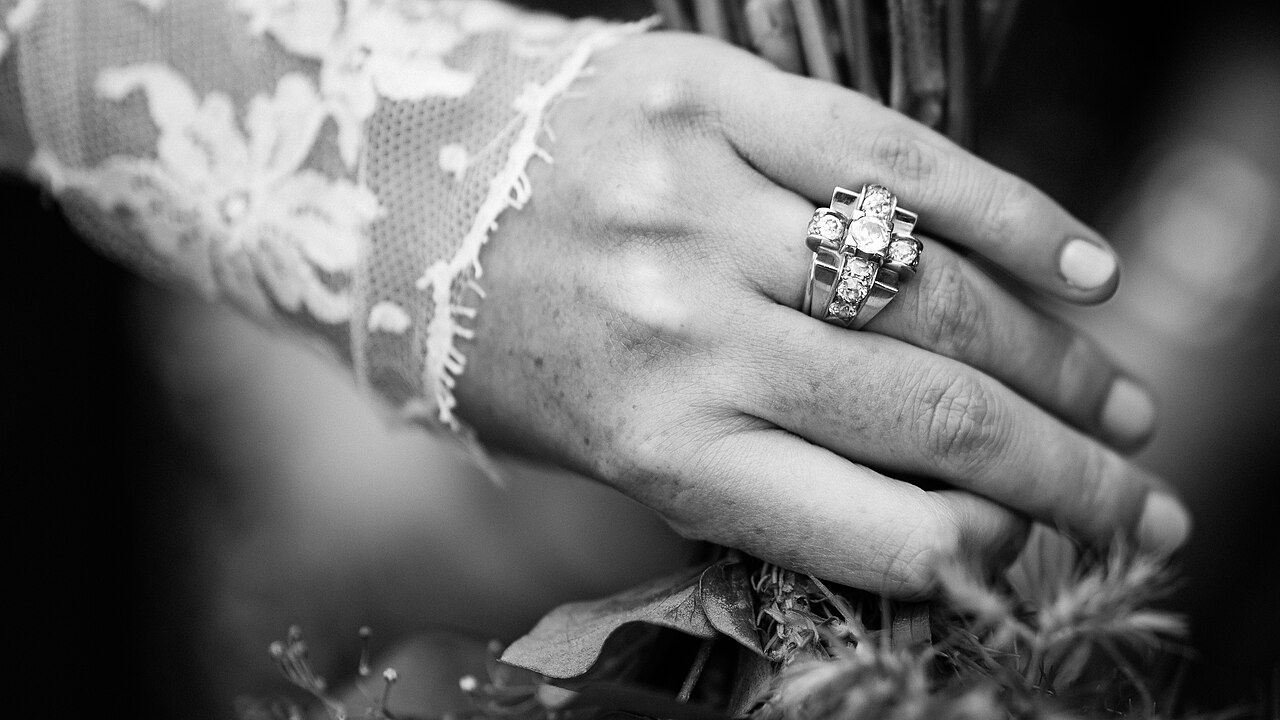
An inherited stone carries more than carat weight. A careful plan protects both the stone and the story while giving it a ring you will actually wear.
Many people would rather wear a grandparent’s diamond than buy a new one, but the original ring may be worn thin, sized for someone else or simply not their style. Resetting moves the stone into a new mounting, and sometimes it adds new stones or reuses the old metal. The work is routine for a good jeweler, provided the stone is properly checked first.
Step one: clean, identify and inspect
Old jewelry often hides its stone under decades of grime. A jeweler will clean it and look at it under magnification, checking:
- What the stone is. Older pieces sometimes contain synthetic stones, imitations or a different gem than the family story suggests. Basic gemological tests settle this.
- Its condition. Old diamonds often have small chips on the girdle or worn facet edges, especially under worn prongs. These can affect how it should be set.
- Treatments. Some diamonds have been laser drilled or fracture-filled, and many colored stones are oiled, heated or filled. A fracture-filled diamond can be damaged by the heat of a jeweler’s torch, so this needs to be known before any work starts. Our guide to gemstone treatments explains the common ones.
Careful: Tell the jeweler everything you know about the stone’s history, including past repairs. If you are unsure whether a diamond is fracture-filled, ask for it to be checked before the old setting is heated or removed.
Old cuts: keep them or recut them?
Diamonds cut before the mid-twentieth century were shaped by hand and often look different from modern stones. Old mine cuts are cushion-shaped with a high crown and small table, and old European cuts are round with large facets and often a visible open culet. They give a softer, chunkier sparkle that many people love. The guide to vintage ring details covers these cuts.
| Option | What it means | Trade-off |
|---|---|---|
| Reset as is | Keep the original cut and character | Sparkle differs from a modern brilliant |
| Repolish | Polish away small chips and worn edges | Small weight loss, original style kept |
| Recut | Re-facet into a modern shape | Noticeable weight loss and a different character |
Recutting is irreversible. It can improve brightness by modern standards, but it removes weight and much of what makes the stone recognizably old. Many families choose to repair chips only and keep the original cut.
Durability of colored heirlooms
Rubies and sapphires are durable enough for everyday rings. Emeralds, opals, pearls and some other gems are more fragile, and an heirloom stone may already have wear. If a fragile stone is going into a ring that will be worn daily, a protective setting such as a bezel is worth considering. See which gemstones hold up in an everyday ring.
Documenting the stone before work starts
Before you leave a stone with a jeweler:
- Ask for a written receipt that describes the stone, including its approximate weight and measurements.
- Take your own photos.
- Ask whether the stone is covered by the jeweler’s insurance while in their care.
If you plan to insure the finished ring, getting a grading report or appraisal while the stone is loose is often easiest. See diamond grading labs and insuring an engagement ring.
What happens to the old metal
Reusing the original gold or platinum is appealing, but old metal is not always ideal for casting. Old rings may contain solder, repairs and alloys of uncertain composition, which can cause porosity in a new casting. Jewelers handle this differently:
- Some cast the new ring directly from the old metal.
- Some refine it first, which takes time and costs extra.
- Some give a credit for the old metal’s value toward new metal.
- Some keep part of the original band as an inner sizing piece or a separate keepsake.
Ask which approach the jeweler uses and get it in writing, along with what happens to any leftover metal.
Designing the new ring
From here the process is the same as any custom piece: a brief, CAD model, resin model, casting and setting, as described in how a custom engagement ring is made. The one difference is that the design starts with a stone that already has a history, which is often the best brief a jeweler can get.
Quick notes
- Have the stone cleaned and inspected before any design work; chips, abrasions and treatments change what is safe to do.
- Fracture-filled diamonds and many colored stones can be damaged by the heat and pressure of repair work, so the jeweler needs to know before starting.
- Old European and old mine cuts can be reset as they are; recutting improves sparkle in modern terms but loses weight and character.
- Ask exactly what will happen to the original metal before you hand it over.
Common questions
Q: Is it safe to remove a stone from an old setting?
A: For a durable stone in sound condition, removal by an experienced setter is routine. Worn prongs, chipped edges and fragile gems raise the risk, which is why the inspection comes first.
Q: Should I get the heirloom diamond graded?
A: It is optional. A grading report is useful for insurance and for planning a setting around exact measurements, and the easiest time to get one is while the stone is out of its old mounting.
Q: Can the old gold be melted into the new ring?
A: Sometimes. Old gold may contain solder and repairs that make casting less predictable, so some jewelers refine it first or offer a credit toward new metal instead. Ask which approach they use.
Q: Can one heirloom stone be split between siblings?
A: A single diamond is not usually divided, because recutting it into two stones loses a great deal of weight. Families more often share the different stones or pieces from a collection.