
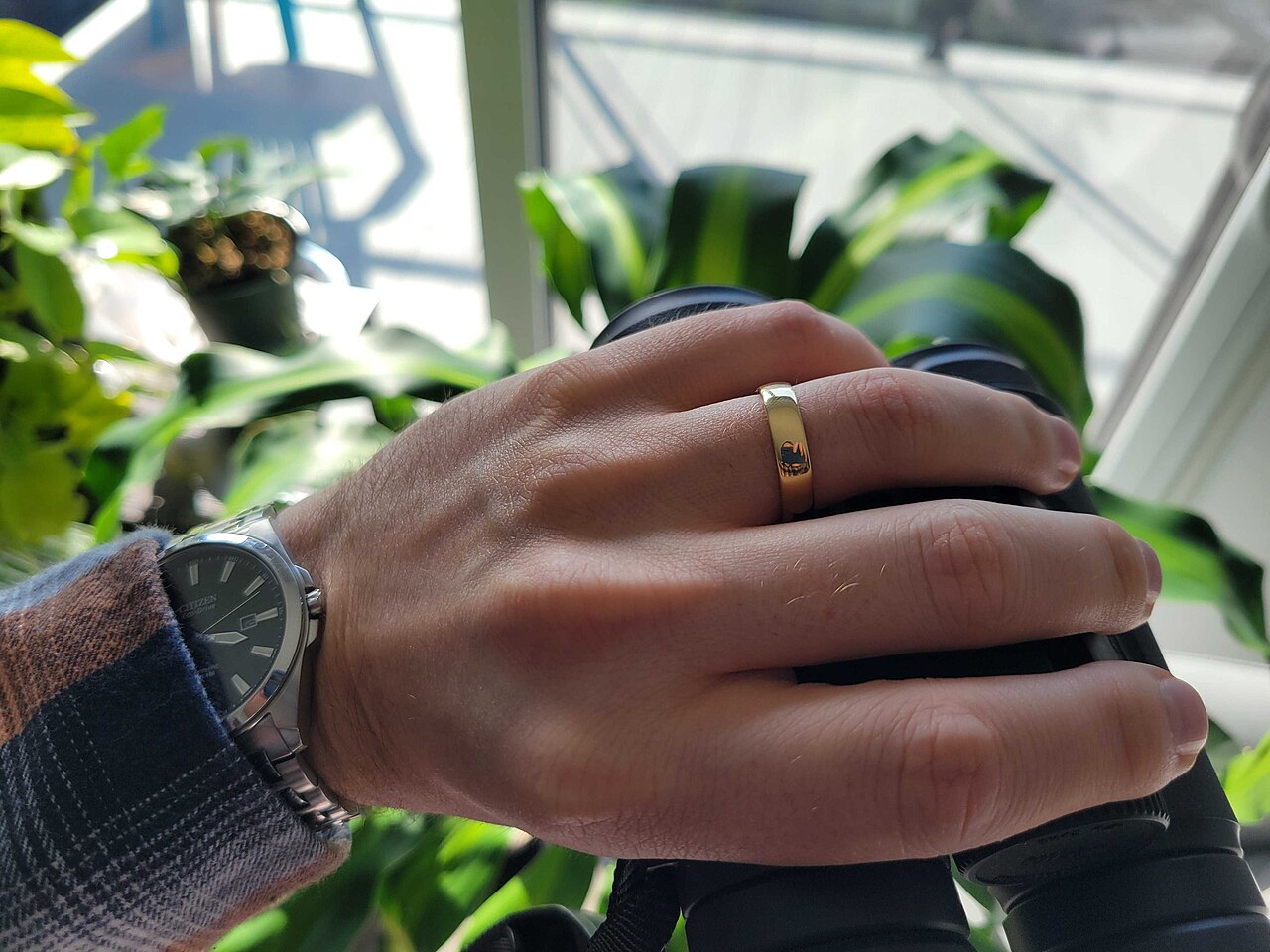
A wedding band is meant to be worn every day for decades. The metal, width and fit decide whether it feels like part of the hand or something to fiddle with.
Men’s wedding bands look simple, but the choices behind them make a real difference to everyday comfort. Metal decides weight, scratch resistance and whether the ring can be resized; width and profile decide how it feels. Here is how the options compare.
Metals compared
| Metal | Feel | Scratches | Resizable | Notes |
|---|---|---|---|---|
| Platinum | Heavy | Develops a soft patina | Yes | Naturally white; see platinum vs. white gold |
| Gold (14K or 18K) | Medium | Scratches; 14K is harder than 18K | Yes | Yellow, white or rose |
| Palladium | Light | Scratches | Yes, by jewelers who work with it | Naturally white platinum-group metal |
| Titanium | Very light | Scratches lightly | Very difficult | Strong and light; limited options for sizing |
| Tungsten carbide | Heavy | Highly scratch resistant | No | Brittle; can crack from a hard impact |
| Cobalt | Medium | Scratch resistant | Limited | White color, similar look to white gold |
| Ceramic | Light | Highly scratch resistant | No | Can crack; many colors |
Precious metals scratch with wear, but they can be polished, resized and repaired for life, which is why they remain the traditional choice. Alternative metals often cost less and resist scratches, but they are harder or impossible to resize. Our guide to which rings can’t be resized explains why, and the exchange policies that often replace resizing.
Careful: Some alternative-metal rings, including some tungsten carbide rings, use binders that may contain nickel or cobalt. If you have a known metal allergy, ask the seller what the ring is made of before buying.
Width
Width changes the look and the feel. Narrow bands are barely noticed; wide bands feel substantial and can be less comfortable when bending the fingers.
| Width | Typical impression |
|---|---|
| 3 to 4 mm | Slim and understated |
| 5 to 6 mm | A common middle ground |
| 7 to 8 mm | Bold; suits larger hands |
| Over 8 mm | Statement band; check comfort |
Try at least two widths on the same finger. A wider band also usually fits a little more snugly than a narrow one in the same size.
Profile and fit
The profile is the band’s shape in cross-section:
- Domed or court profiles are rounded on top.
- Flat profiles have a modern, crisp look.
- Beveled edges add a defined line on each side.
The inside of the band matters as much as the outside. Standard fit bands are flat inside; comfort fit bands are rounded inside, so they slide over the knuckle more easily and feel softer against the finger. Comfort fit can feel slightly looser or tighter than a standard fit in the same size, so try a comfort-fit sizer before ordering.
Finishes
- Polished: shiny; shows scratches but can be refinished.
- Brushed or satin: soft matte texture that hides fine scratches.
- Hammered: textured surface with small facets.
- Inlays: wood, carbon fiber or other materials set into the band; check how they handle water and wear.
Finishes on precious metals can be renewed by a jeweler. Textures on alternative metals usually cannot.
Practical considerations
- Work. Anyone who works around machinery should ask an employer about rings at work. Some people wear a silicone band during work or sport and the metal band the rest of the time.
- Knuckles. Large knuckles with slimmer fingers make sizing harder; comfort fit and sizing inserts help.
- Engraving. Most metals can be engraved; tungsten and ceramic usually need laser engraving. See the engraving guide.
Matching the partner’s ring
There is no need to match the engagement ring or the partner’s band. Many couples choose the same metal color, finish or edge detail so the rings feel related without being identical. If one partner wears an engagement ring and band together, the guide to pairing a wedding band covers that fit, and low-profile rings has flush-set options that also suit men’s bands with a stone.
Quick notes
- Gold, platinum and palladium can be resized and repaired; tungsten carbide and ceramic cannot be resized, and titanium is very hard to resize.
- Tungsten carbide resists scratches extremely well but is brittle and can crack from a hard impact.
- Many men’s bands fall between 4 and 8 millimeters wide; try a few widths, because width changes how a band feels as much as how it looks.
- Comfort-fit bands are rounded inside and slide over the knuckle more easily, and they can fit slightly differently from standard bands of the same size.
Common questions
Q: What width is most common for a men’s wedding band?
A: Many men’s bands are between 4 and 8 millimeters wide, with widths around 6 millimeters a common middle ground. Larger hands often suit wider bands, but comfort and habit matter more than any rule.
Q: Is a tungsten band a good idea?
A: It suits people who want a band that stays unscratched and do not expect to change size. It cannot be resized, and a hard knock can crack it, so check the seller’s exchange and replacement policy.
Q: Should I choose comfort fit?
A: Many people find comfort fit easier to wear all day and easier to slide over the knuckle. Because it fits differently, try on a comfort-fit sizer rather than assuming your usual size.
Q: Does the band have to match the engagement ring metal?
A: No. Many couples choose different metals or finishes. Some choose a shared detail, such as the same metal color or a similar edge, to tie the rings together.