
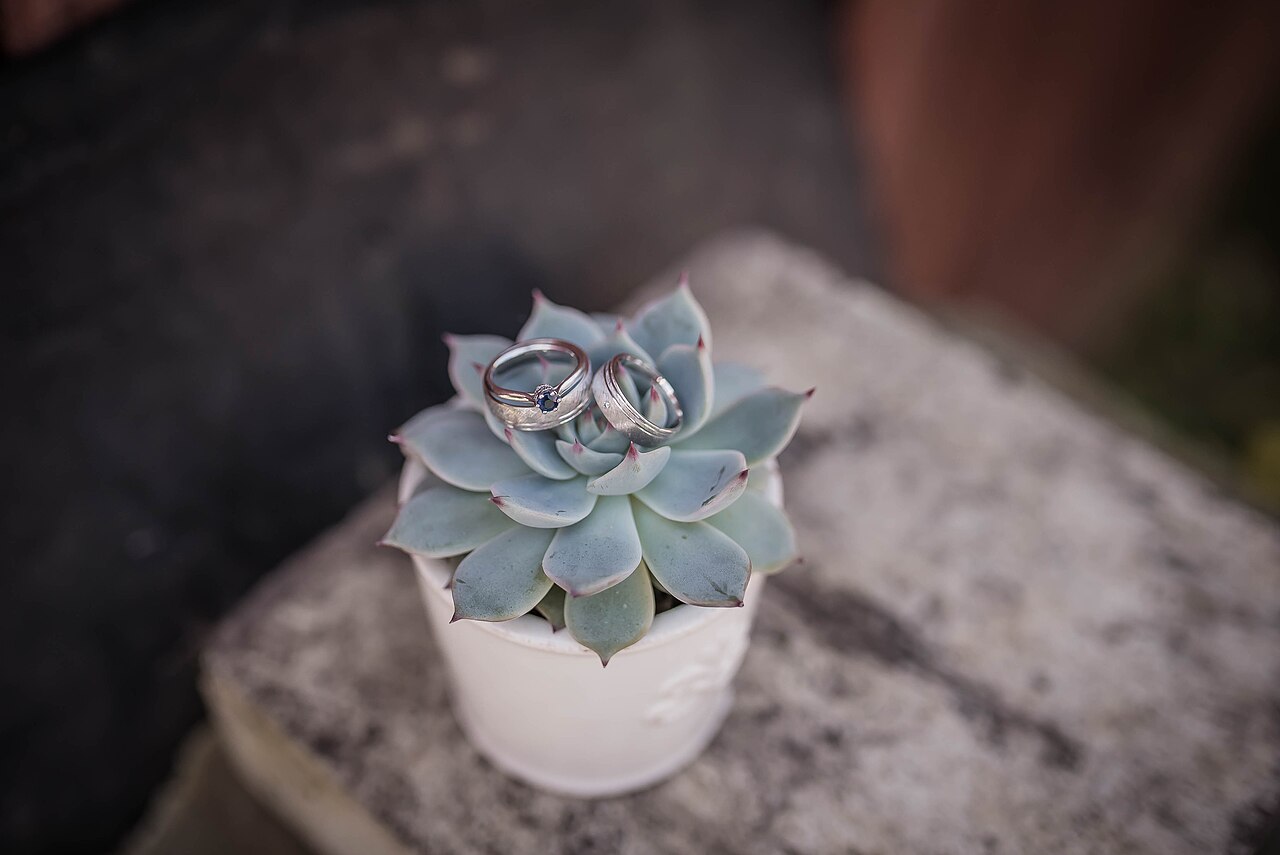
Both metals look white in the store. The differences show up later, in how the ring wears, what it needs to stay bright and how it feels on the finger.
Platinum and white gold are the two main white metals for engagement rings, and in a showcase they can be hard to tell apart. The differences are in what the metal is made of, how it wears and what it costs to keep looking new. Here is a side-by-side comparison, followed by the details behind it.
The two metals side by side
| Platinum | White gold | |
|---|---|---|
| What it is | Mostly pure platinum, commonly 95% | Gold alloyed with white metals such as palladium or nickel |
| Natural color | White | Pale, slightly warm gray; usually rhodium-plated |
| Weight | Heavy for its size | Lighter than platinum |
| How it wears | Develops a satin patina; metal is displaced, not lost quickly | Rhodium wears thin; underlying color can show |
| Routine upkeep | Polishing if you want the shine back | Replating to restore bright white |
| Sensitive skin | Generally well tolerated | Depends on the alloy; nickel alloys can cause reactions |
| Typical marks | 950Plat, PT950, 900Pt, 850Plat | 14K, 18K, sometimes with “W” for white |
What the stamps mean
The Federal Trade Commission’s Jewelry Guides set out how precious metals should be described in the United States. A ring may be called platinum without any qualifier only if it contains at least 950 parts per thousand pure platinum. Alloys with 850 or 900 parts per thousand should carry the number, as in 850Plat or 900Pt. “Plat.” and “Pt.” are the standard abbreviations.
White gold is marked by karat. 14K gold is 58.3% gold and 18K is 75% gold, with the rest made up of other metals that whiten and harden it. The higher the karat, the warmer the natural tone, which is one reason 18K white gold is almost always plated.
Rhodium plating
Rhodium is a bright white metal in the platinum family, applied as a very thin surface layer. It gives white gold its mirror-white look in the store. The FTC Jewelry Guides treat rhodium plating as something that must be disclosed when a product is described as a precious metal, so a seller should tell you if a ring is plated.
The plating wears away gradually, fastest on the palm side of the band where the ring rubs against everything you hold. When the warmer metal starts to show, a jeweler can clean the ring and replate it. That is a routine, inexpensive service, but it is a recurring one, and it is the main ongoing cost of white gold.
Remember this: If an engagement ring and a wedding band will be worn together, plan to replate them together. A freshly plated ring next to a worn one can look like two different metals.
Weight and feel
Platinum is far denser than gold alloys, so the same design weighs noticeably more in platinum. Some people like the solid feel; others find a wide platinum band heavy. If you are unsure, compare two similar rings on the hand before deciding, especially for a men’s band, which uses more metal. Our men’s wedding band guide covers widths and weight.
How each metal holds a stone
Platinum is tough and ductile, so platinum prongs bend rather than snap and many jewelers favor them for holding valuable stones. White gold prongs are harder and more springy, and they hold stones well too. In both metals, prongs wear down slowly and should be checked periodically. The prong settings guide explains what to look for.
Cost
A platinum ring often costs more than the same ring in white gold, because it uses more metal by weight and takes more specialized work to cast, size and polish. Metal market prices move, though, so compare current quotes for the same design rather than assuming a fixed gap.
Sizing and repairs
Both metals can usually be resized. Platinum requires higher heat and a jeweler experienced with it, and white gold needs replating after sizing. Some designs cannot be resized at all whatever the metal; see which rings can’t be resized.
Matching the wedding band
Wearing two different white metals side by side can look mismatched over time as one develops a patina and the other loses its plating, and harder metals can wear softer ones where the rings rub. Matching the metal of the engagement ring and the band avoids both issues. The guide to pairing a wedding band covers fit and shape, and the custom ring process explains when the metal choice gets locked in.
Quick notes
- Platinum is naturally white and much denser than gold alloys, so a platinum ring feels heavier than the same design in white gold.
- Most white gold is plated with rhodium for a bright white finish, and the plating wears over time and needs renewing.
- Under the FTC Jewelry Guides, a seller must disclose a rhodium surface layer on a ring described as a precious metal.
- Unqualified ‘platinum’ means at least 950 parts per thousand pure platinum; alloys with less carry a number such as 850Plat.
Common questions
Q: Does platinum scratch less than white gold?
A: Both metals scratch. Platinum tends to develop a soft, matte patina because scratches move metal rather than removing much of it, while scratches on white gold can expose the slightly warmer metal under worn rhodium. Either can be polished back to shine.
Q: How often does white gold need replating?
A: It depends on the alloy and how hard the ring is worn. Many owners of everyday rings have them replated every year or two, and a jeweler can tell when the color has started to show through.
Q: Is platinum better for people with sensitive skin?
A: Platinum is generally a good choice for sensitive skin. Some white gold is alloyed with nickel, a common skin allergen, so if allergies are a concern ask for nickel-free white gold, such as palladium white gold, or choose platinum.
Q: Can a white gold ring be left unplated?
A: Yes. Unplated white gold has a soft, slightly warm gray tone. Some people prefer it, and it avoids replating, but it will not match a plated wedding band side by side.