
Shape is the first thing anyone notices about a ring, and it shapes every decision after it, from setting to wedding band.
Jewelers use two words that are easy to mix up. Shape is the outline you see from above: round, oval, square, pear. Cut style is the pattern of facets that gives the stone its sparkle. A cushion and a radiant can both be squarish, for example, but their facets make them behave differently in light. This guide pairs the two so you can predict what a stone will look like before you see it in person.
Brilliant cuts and step cuts
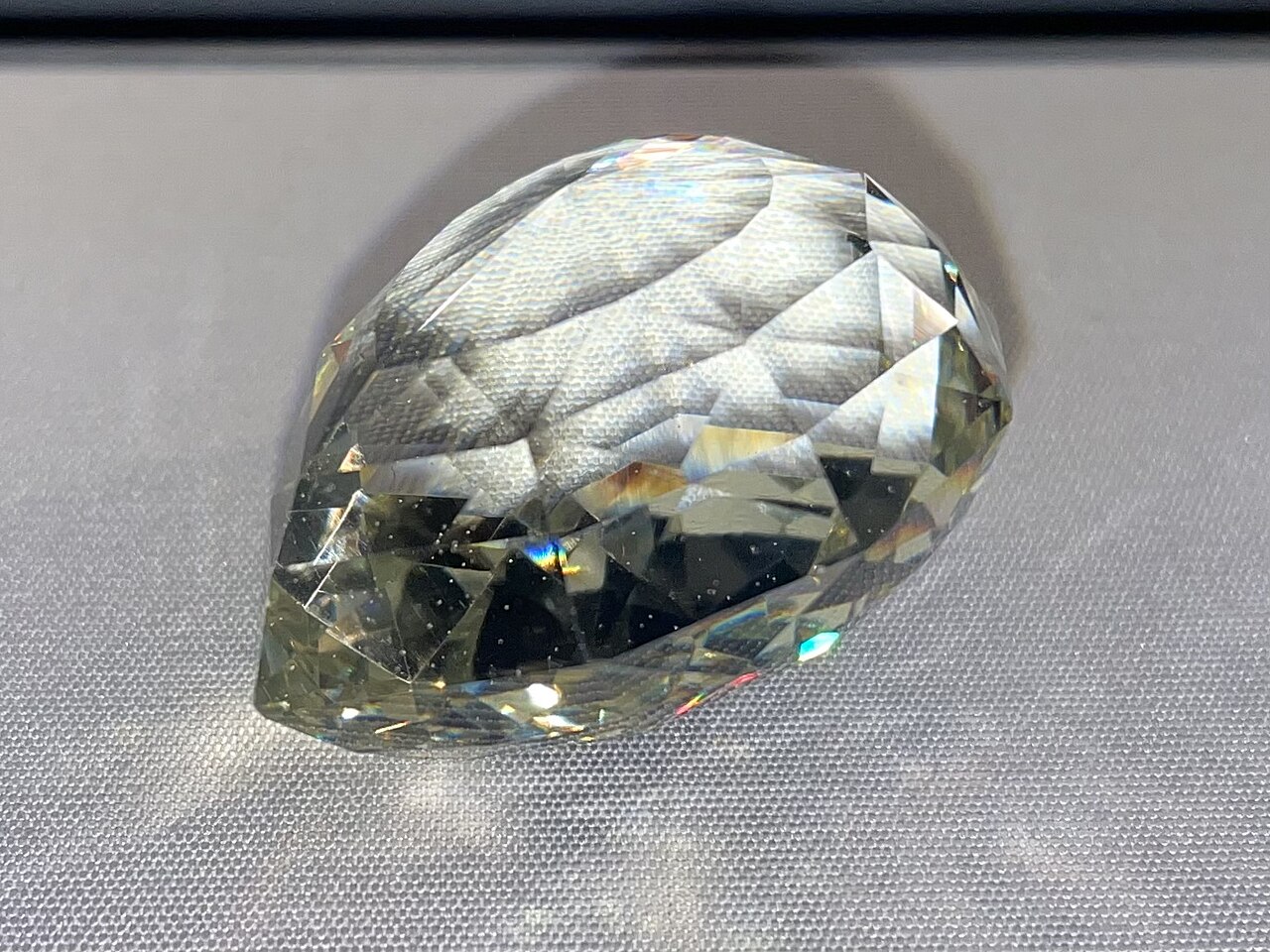
Most diamonds sold today are brilliant cuts, with many triangular and kite-shaped facets that break light into small, lively flashes. Round, oval, pear, marquise, heart, princess, cushion and radiant shapes are usually cut this way.
Step cuts use long, rectangular facets arranged in rows like stairs. Emerald and Asscher cuts are the main examples. Instead of glitter, step cuts give broad flashes and a glassy, layered look sometimes called a hall of mirrors. Because the facets are large and open, step cuts show inclusions and body color more readily, which is covered in our guide to step-cut diamonds.
How the main shapes compare
| Shape | Cut style | Look on the hand | Setting notes |
|---|---|---|---|
| Round | Brilliant | Classic, strongest sparkle | Suits any setting |
| Oval | Brilliant | Elongates the finger, looks large for its weight | Watch for a bow-tie shadow |
| Cushion | Brilliant (modified) | Soft square or rectangle, rounded corners | Wide stones may need a curved band |
| Princess | Brilliant | Crisp square with sharp corners | Protect corners with V-prongs |
| Radiant | Brilliant | Rectangle or square with clipped corners, very bright | Durable corners |
| Emerald | Step | Long rectangle, mirror-like flashes | Higher clarity matters more |
| Asscher | Step | Square with cropped corners, layered look | Higher clarity matters more |
| Pear | Brilliant | Teardrop, elongating | Protect the point |
| Marquise | Brilliant | Long boat shape with two points | Protect both points |
| Heart | Brilliant | Romantic, needs good symmetry | Small hearts can read as triangles |
Round: the benchmark
The round brilliant is the most researched diamond shape, and grading labs such as the Gemological Institute of America assign an overall cut grade from Excellent to Poor only to standard round brilliants. That makes rounds the easiest shape to compare on paper. The grading report sections are explained in how to read a diamond grading report.
Ovals, pears and marquise: elongated shapes
Elongated brilliants spread their carat weight over a longer outline, so they tend to look larger than a round of the same weight and make the finger look slimmer. Two things decide how they look: the length-to-width ratio (a slim or a chubby outline) and the bow-tie, a dark band across the middle that appears in many elongated stones. Both are explained in our guide to length-to-width ratio and the bow-tie effect.
Pears and marquise cuts have points that can chip if knocked. A V-shaped prong or a bezel tip over each point is the usual protection.
Cushion and radiant: square with softer corners
Cushions have rounded corners and come in two broad facet styles. Some show larger, distinct flashes, and others show many tiny ones that look like crushed ice. Photos and videos are the best way to see which style a stone has, because the grading report usually just says “modified brilliant.” Radiants combine the clipped-corner outline of an emerald cut with brilliant faceting, giving a bright, sparkly stone with corners that are less prone to chipping than a princess cut.
Princess: sharp and modern
The princess cut is a square brilliant with pointed corners. It yields a lot of sparkle for a square stone, but those corners are its weak spot. V-shaped prongs that wrap each corner are the standard protection, and they are worth confirming before buying a mounting. The prong settings guide shows the tip shapes.
Careful: Corners and points are where most diamond chips happen. Whatever the shape, ask how the setting protects any sharp corner or point, especially for a ring that will be worn every day.
Antique cuts
Old European and old mine cuts were cut by hand before modern round brilliants became standard. They have larger facets, a smaller table and often a visible opening at the bottom of the stone called an open culet, which gives a softer, chunkier sparkle. Our guide to vintage ring details covers these cuts and the settings that usually go with them.
Choosing a shape
Start with the outline the wearer is drawn to, then check the practical side: how the shape suits the setting you like, as compared in engagement ring settings, how much sparkle you want and how much the stone will be exposed during everyday wear. Seeing a few shapes on the hand, even in a store or in try-on photos, is usually more decisive than any chart.
Quick notes
- Shape describes the outline of a diamond; cut style describes how its facets are arranged, and the two together decide how it sparkles.
- Brilliant cuts such as round, oval and pear scatter light into many small flashes, while step cuts such as emerald and Asscher show broad, mirror-like flashes.
- Elongated shapes tend to look larger on the finger than a round diamond of the same carat weight.
- Shapes with points or sharp corners need prongs or a bezel that protect those tips.
Common questions
Q: Which diamond shape sparkles the most?
A: Round brilliants are designed around maximum light return, and they are the only shape that most major labs give an overall cut grade. Well-cut ovals, cushions and radiants can sparkle strongly too, but their quality varies more from stone to stone.
Q: Do some shapes cost less per carat?
A: Fancy shapes are often priced below rounds of similar weight and grades, partly because cutting a round from rough loses more material. Prices vary widely, so compare specific stones rather than relying on a rule.
Q: Which shapes hide inclusions best?
A: Brilliant-cut shapes with many small facets tend to mask small inclusions better than step cuts, whose large open facets can make inclusions and color easier to see.
Q: Does shape affect the choice of wedding band?
A: It can. Long shapes set east to west, wide cushions and pointed shapes may need a curved or notched band, while a round or oval in a low setting usually sits beside a straight band.